
Don't look away
Movies and books for 0º

I watched many things since I last substacked: No Other Choice (amazing), Hamnet (I know it’s manipulative or whatever but I thought it was good), Rachel Getting Married (takes realism too far), Die My Love (all the formal rigor of a late-aughts CW show without the fun), half of Silver Linings Playbook (have the screenwriters ever heard two people speak in real life?).
R— and I watched videos of each other from 2015 and ’16, since the meme the previous week had been to post said content. I found it difficult to look at myself. Was that myself? Clearly, and that is the problem—or opportunity.
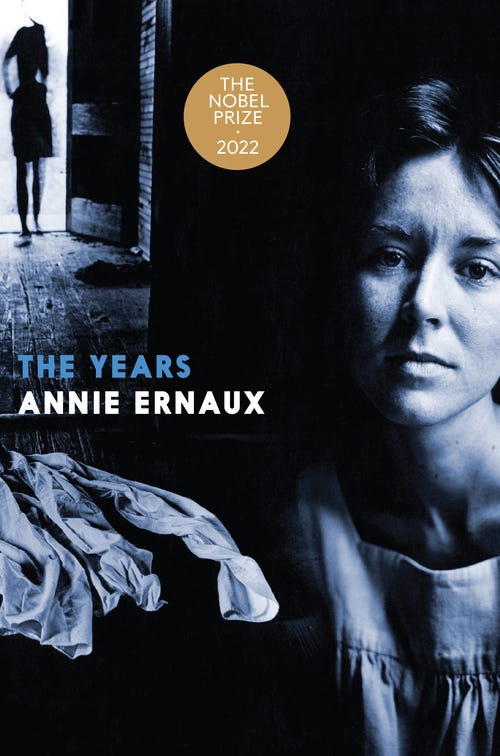
Annie Ernaux, considering an old photograph: “Of all the ways in which self-knowledge may be fostered, perhaps one of the greatest is a person’s ability to discern how they view the past, at every time of life and every age.”
L— and I go to see Cure. Think a grittier David Lynch making Silence of the Lambs in Japan. Or, I guess, loosely, late Tarkovsky if late Tarkovsky decided to make a crime thriller/make sense. Basically, the film tells you everything that a normal detective movie would’ve hidden from the start, so it is no longer a detective movie. Instead it is a movie about transference/counter-transference. About identity and refusal. I liked how it looked.
I do the exercises I am told will free my spine from my consciousness, or that will bring a whole-body consciousness that will make me, anatomically, free. I skim Giovani’s Room, in which James Baldwin wrote, “People who believe that they are strong-willed and the masters of their destiny can only continue to believe this by becoming specialists in self-deception. Their decisions are not really decisions at all—a real decision makes one humble, one knows that it is at the mercy of more things than can be named—but elaborate systems of evasion, of illusion, designed to make themselves and the world appear to be what they and the world are not.”
I suspect that one must self-deceive to live at all, or, I mean, that whatever truth one arrives to occludes yet another.
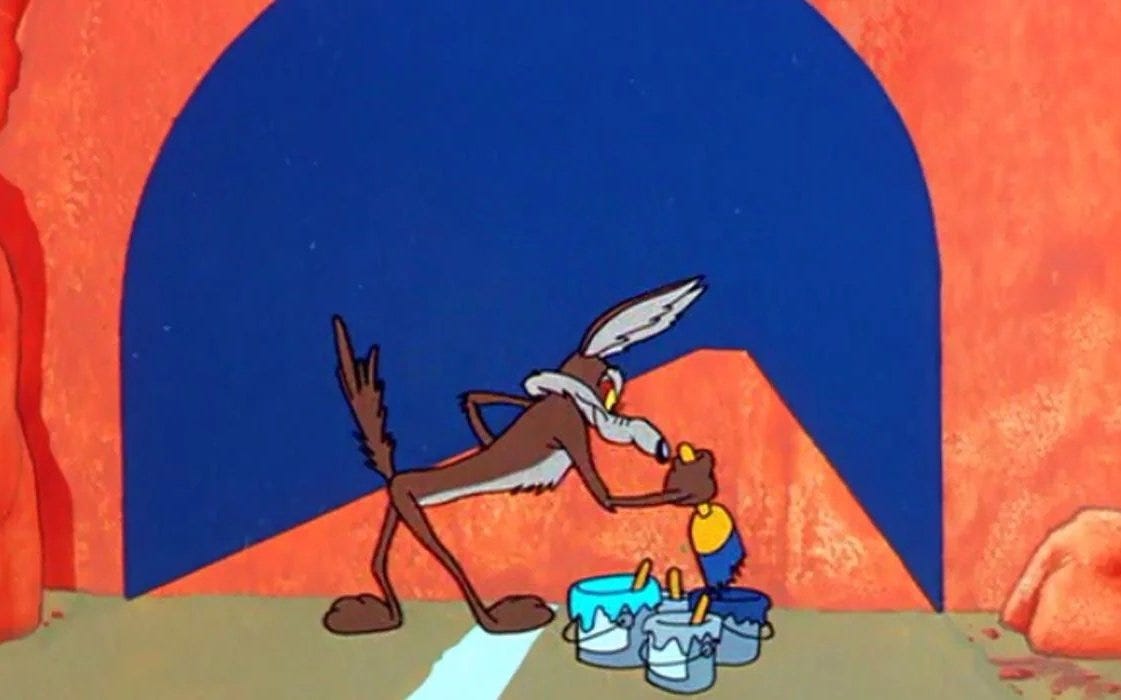
Half-recumbent on my analyst’s green leather couch I say I wish to view my selves—my ways of presenting them to the world in writing, being, so on—as not unlike how Italo Calvino describes Invisible Cities for which he “built up a many-faceted structure in which each brief text is close to the others in a series that does not imply logical sequence or a hierarchy, but a network in which one can follow multiple routes and draw multiple, ramified conclusions.” I imagine a series of prisms which refract one another. Transforming. Splintered light. Movement. The transformation of what is there, how that is shown and seen. But, in the end, the prisms insist on showing what exists, what is real—ever differently. Instead, I tell my analyst, I live my life like Wile E. Coyote. In place of revealing my identity I paint a trompe l’oeil tunnel onto a mountain—an utterly believably facsimile of the real—with which I hope to capture the Other, but the Other runs straight through the unreality I cannot control while I crash my skull against the stone.
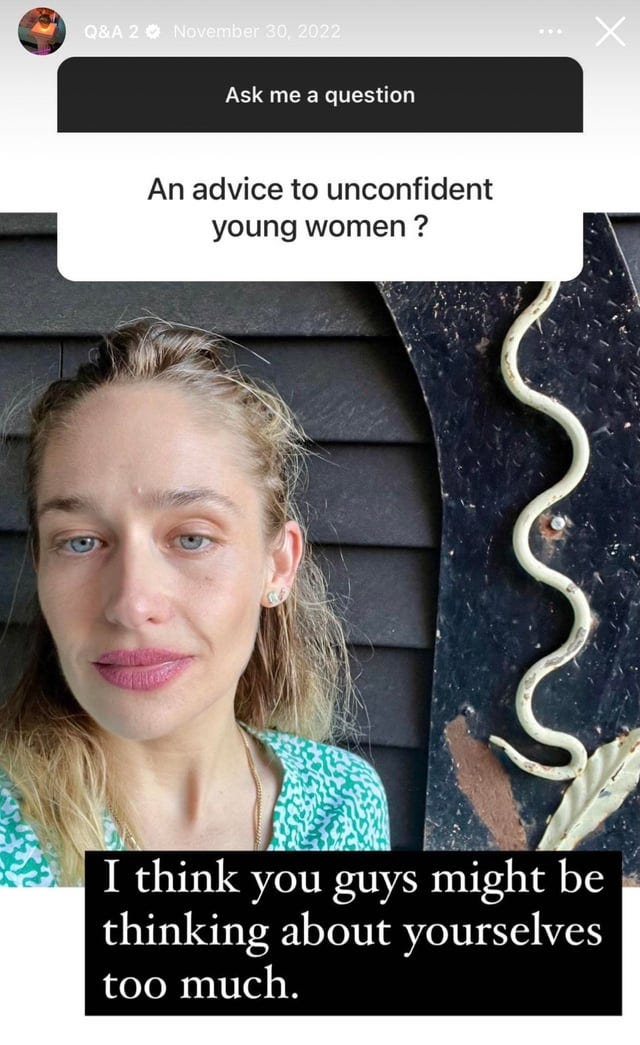
He doesn’t have to point out that my whole analogy is, in some sense, spurious. Like everyone’s, my identity is always-already split, and my ego-mask is always doing the work of revealing that for me, just not to myself.
In the morning, as my coffee brews on the stove, I read aloud to myself the beginning of Mario Levrero’s novel about writing an impossible novel. He, or the narrator, wishes to capture “luminous” experiences, which are experiences that he necessarily can’t capture, so he spends all his time trying to get to the state to capture them (ie., he plays a gold video game and doesn’t write). Then, before bed, I read about Marco Rubio in an article which featured such galaxy-brained lib takes in defense of foreign aid such as “Tom Shannon, the former Under-Secretary, explained, ‘The battle for technological superiority and economic dominance is going to be built through the markets and the resources of the Global South. Why would you take the one instrument that you have that connects you to all the Global South countries—and not just to governments but to peoples and societies—and blow it up?’” I also read, per a former Rubio staffer, “Most senators don’t read.”
Upon waking I read about ICE abductees left for months without medical care. I listen to a podcast about psychoanalysis in groups, about the invention of personality, about belief. My psychoanalyst says something about energy and I call him superstitious; I read his reaction as defensive. I defend my point of view until he stops speaking. Am I an agent of change or merely being changed in obvious ways?
I stop writing this post. I wanted to write about my life and to write about the lives some version of a we, which is to say an I in its world, but my writing felt trite, or worse, self-involved—a failure and not in an interesting way. I can’t write about the disaster of The Now as Erneaux does in The Years, maybe, because she is writing history, not the present, or she’s writing a present that is constantly moving in a way that has already been historicized. I am living, we are living, among the continuous wreckage that is the unceasing emergence, the many presents mediated and felt at once, in conflict, exceeding describability. The news is unrelenting, and the streets too, our lives, and here I am, writing about my days, about film or art seen.
E— and I saw: swirly layered paintings at Silke Lindner (I guess I miss taking acid), paintings of cats and wall sculptures of like deconstructed cameras or something at Chapter, and the Tom Burr assemblages upstairs at Bortolami (totally giving gay guy). Have a non-alcoholic beer.
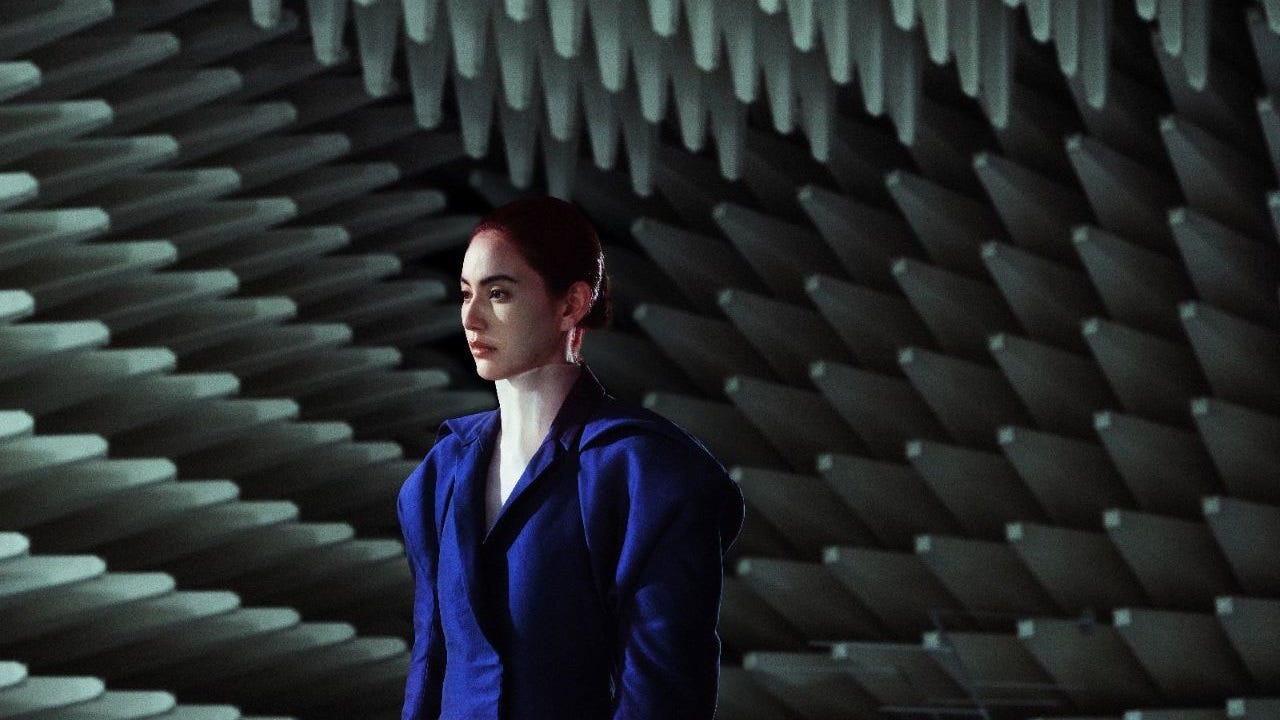
R— and I watched: Festen (a family disaster; I liked it!), then something else I forget… oh, Beau Travail; watched Chloe, an insane movie where Julianne Moore hires a sex worker played by Amanda Seyfried to entrap her husband, Liam Neeson. Basically it’s all shot in transparent buildings (Moore’s fertility office, Moore’s glass home, plate-glassed coffee shops across from Toronto strip malls). Not good but like also a hilarious way to spend ninety minutes. Watched Herzog’s documentary on Antarctica then a bunch of YouTube videos about convergent evolution. Watching Nymphomaniac volumes one and two did not provide me with a monologue to perform for my acting class. Nor did A Useful Ghost, a movie about possessed vacuum cleaners, love, and collective memory—fantastic movie, every shot a sculpture, go to IFC stat. Here is a way history occupies the present: as a haunting.
The ghosts occupy dreams, find love, help electroshock technicians erase political education that leads to rebellion—or help save it.
“Psychoanalysis is not in the business of moral enlightenment, at least not directly. Its knowledge is descriptive rather than prescriptive: about the way things are, rather than what they ought to be,” writes Amia Srinivasan in the London Review of Books. “For those who have read their Marx, this is already a step in the right direction—that is, in the direction of a theory capable of producing change.”
“It is easy to forget that all accounts of the goals of psychoanalysis are prescriptions presented as descriptions,” claims Adam Philips, also in the LRB.
What something claims to do, tries to do, and in fact can do are not coeval, is my takeaway.
I cancel analysis on Thursday. I have one glass of wine, which is the most I’ve allowed myself each week since I’ve said I stopped drinking, so long as it’s with, like, shellfish or something. I have fantasies or delusions of enjoyment or control.
“Now let’s sit here for a bit, and stop being sorry about the things we’ve done,” reads the epigraph to this Carl Phillips book I’ve been meaning to read forever. An epigraph by one Tarjei Vesaas, a dead Norwegian writer whom I’d never heard of.
I want to misread the quote as saying something to the effect that being sorry doesn’t get things done, but clearly guilt is doing something for me even if it’s not serving me nor the world I’m in.
But I am getting too personal.
The good movies and books:
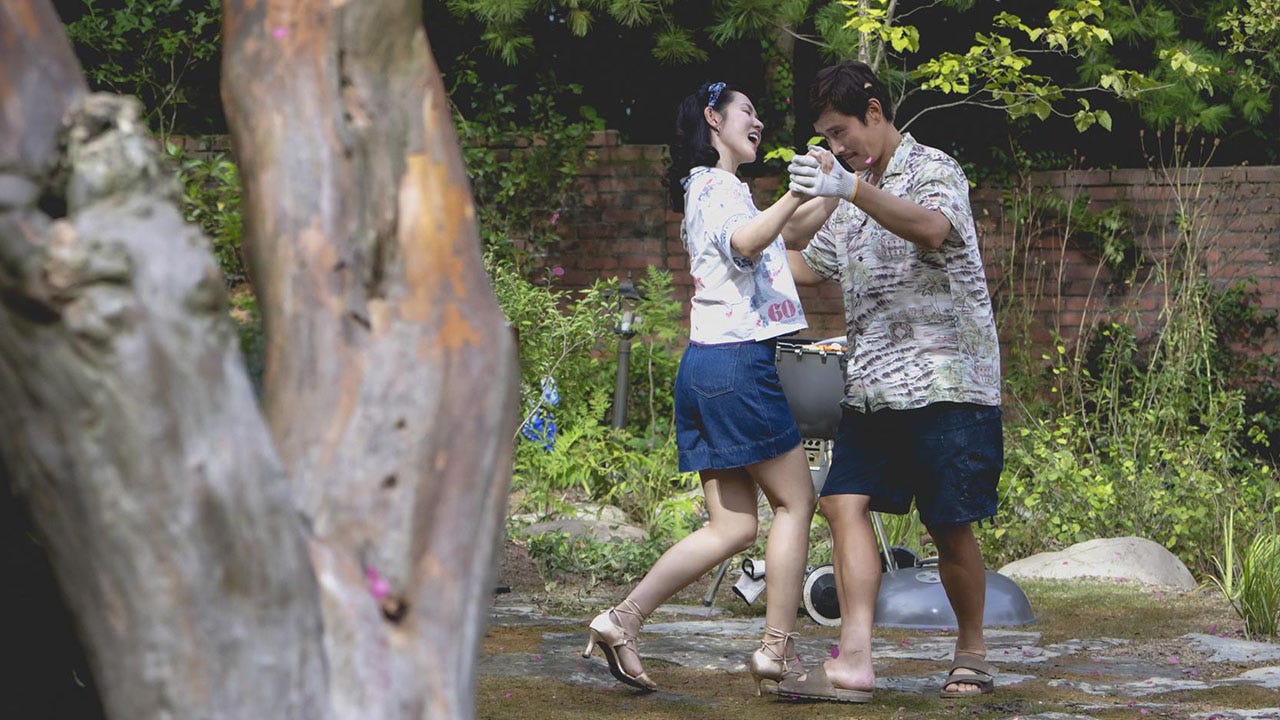
Park Chan-wook, No Other Choice (2025)
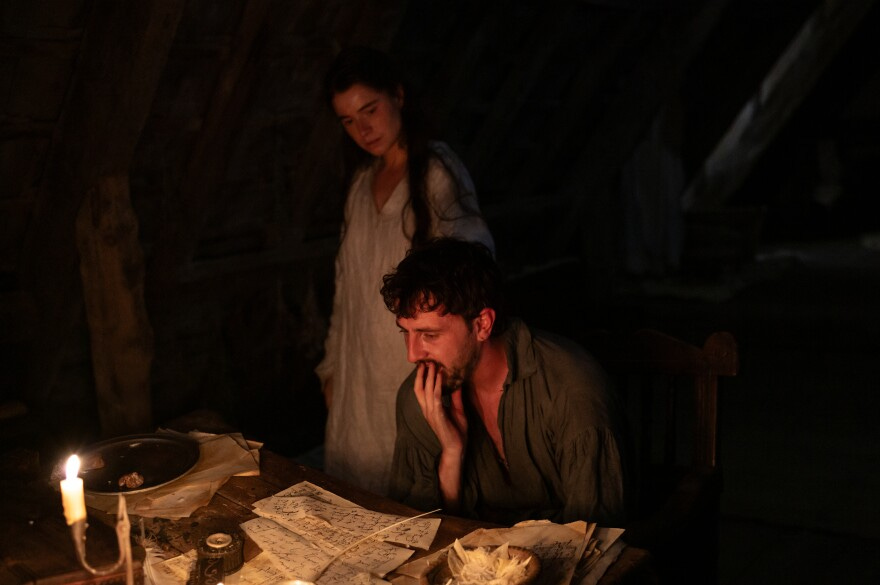
Chloé Zhao, Hamnet (2025)
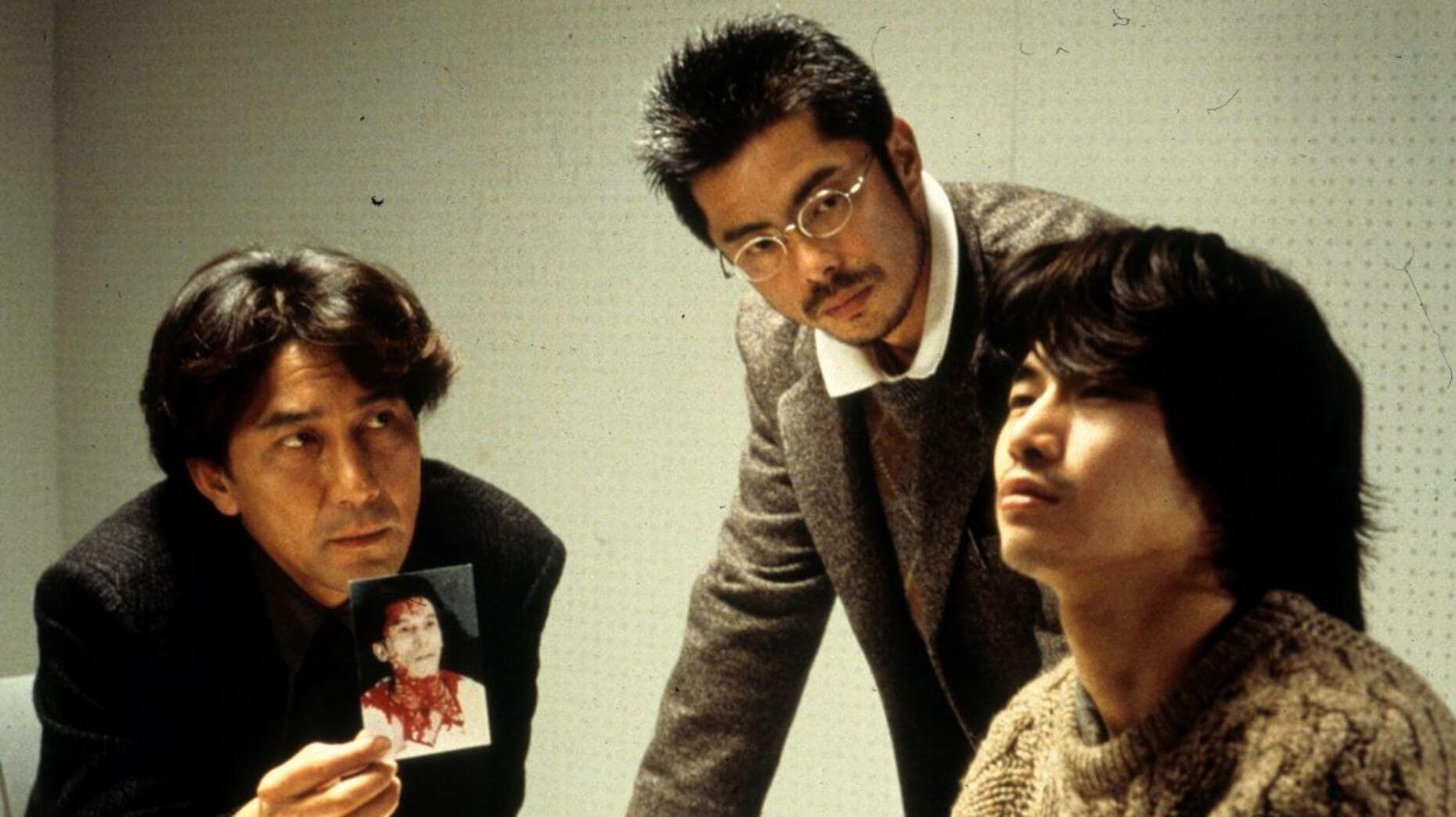
Kiyoshi Kurosawa, Cure (1997)
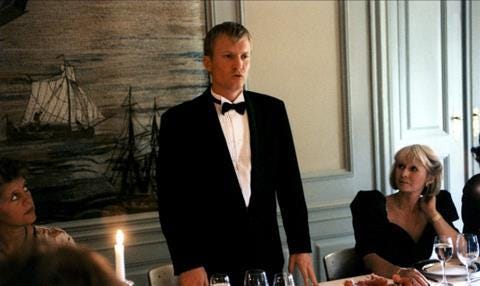
Thomas Vinterberg, Festen (1998)
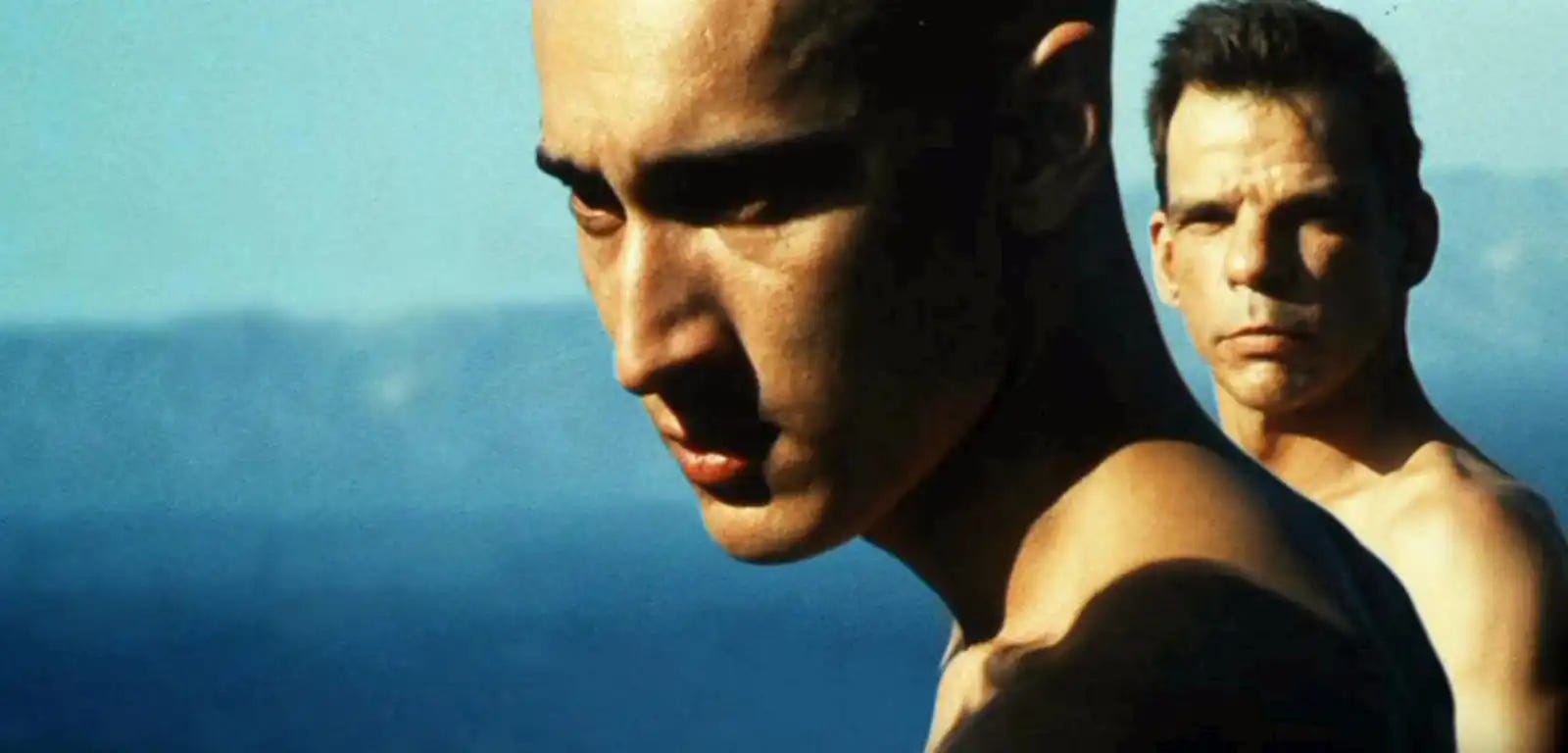
Claire Denis, Beau Travail (1999)
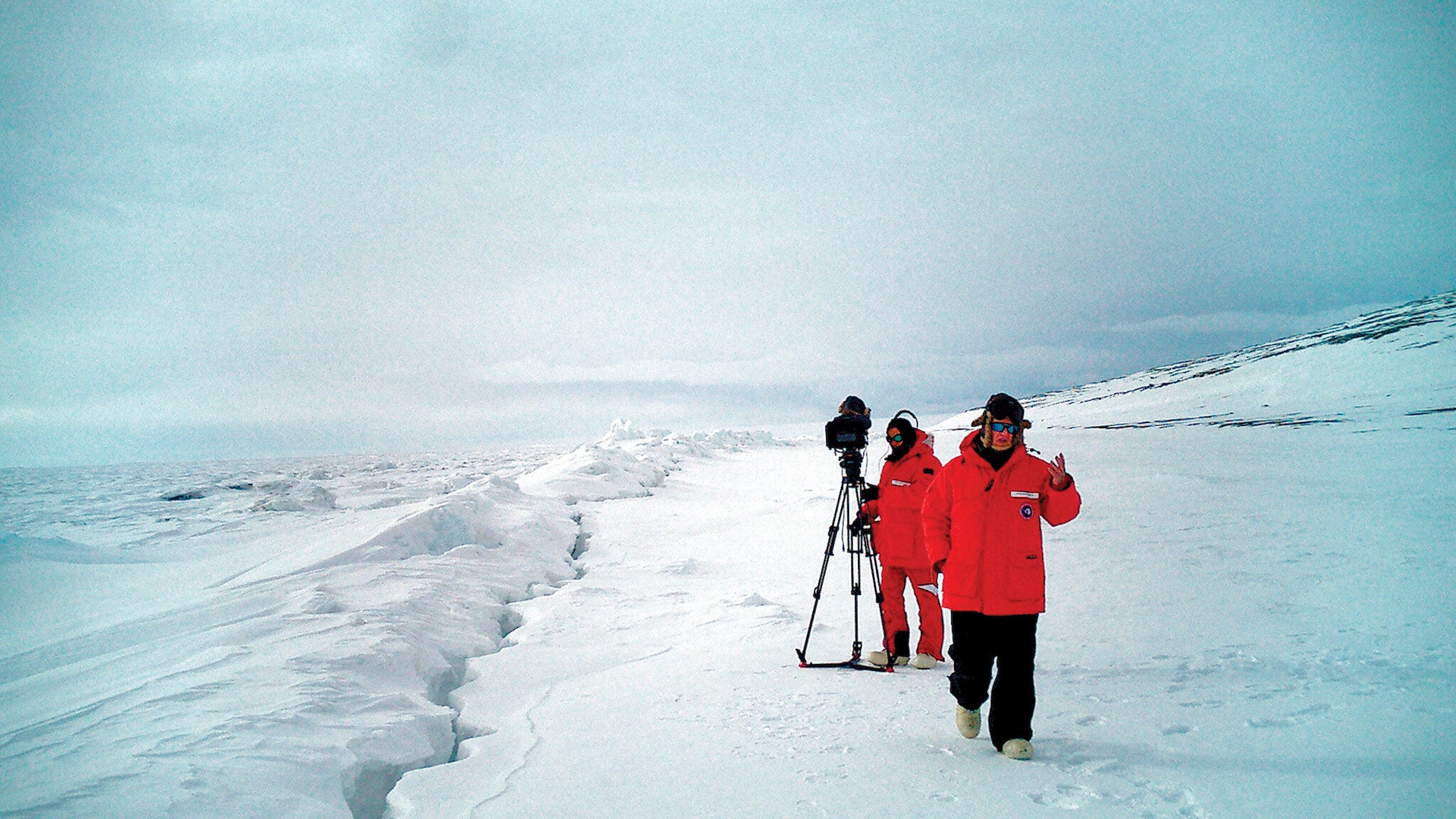
Werner Herzog, Encounters at the End of the World (2007)
Ratchapoom Boonbunchachoke, A Useful Ghost (2025)
Annie Ernaux, The Years (2008/tr. 2017 by Alison L. Strayer)
James Baldwin, Giovanni’s Room (1956)
Mario Levrero, La Novela Luminosa (2005)
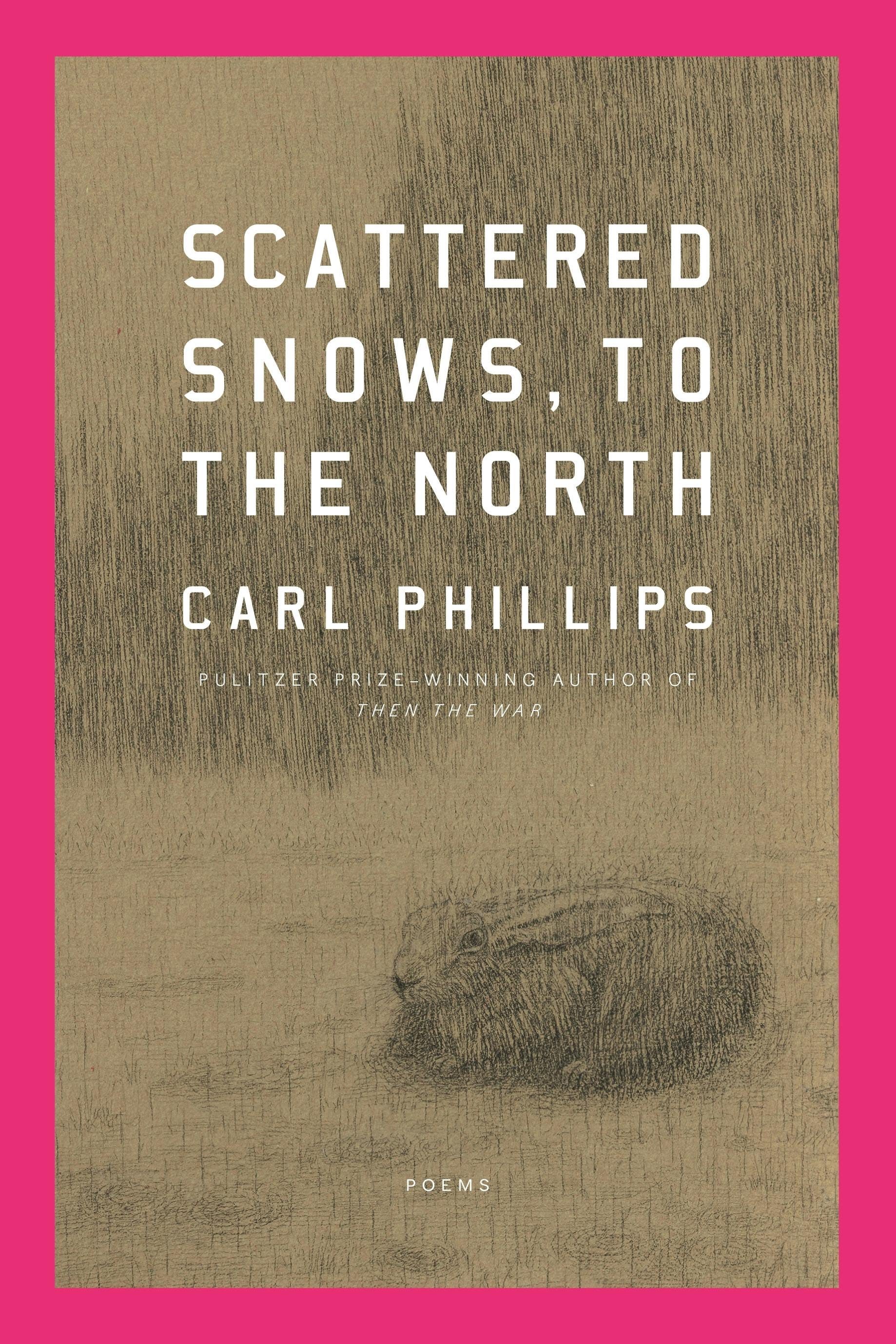
Carl Phillips, Scattered Snows, to the North (2024)
I love your taste